

What is the source of raw materials for White Gold Ceramic Tile?
Nov 12, 2025
Leave a message
Hey there! As a supplier of White Gold Ceramic Tile, I often get asked about where the raw materials for these stunning tiles come from. So, let's dive right into it and explore the sources of the raw materials that make our White Gold Ceramic Tiles so special.
The Basics of Ceramic Tile Raw Materials
Before we get into the specific sources, let's briefly talk about what goes into making ceramic tiles in general. Ceramic tiles are typically made from a combination of clay, minerals, and other additives. These materials are mixed together, shaped into tiles, and then fired at high temperatures to create a hard, durable surface.
Clay: The Foundation of Ceramic Tiles
Clay is the primary raw material used in the production of ceramic tiles. It provides the tile with its shape, strength, and flexibility during the manufacturing process. There are different types of clay used in tile production, each with its own unique properties.
One of the most common types of clay used in ceramic tile manufacturing is kaolin clay. Kaolin clay is a white, fine-grained clay that is known for its high plasticity and low iron content. This makes it ideal for producing white or light-colored tiles, such as our White Gold Ceramic Tiles. Kaolin clay is typically mined from deposits around the world, including the United States, the United Kingdom, and China.
Another type of clay used in tile production is ball clay. Ball clay is a highly plastic clay that is often used in combination with kaolin clay to improve the tile's strength and workability. Ball clay is typically mined from deposits in the United States, the United Kingdom, and Germany.
Minerals: Adding Color and Durability
In addition to clay, ceramic tiles also contain a variety of minerals that are added to give the tiles their color, texture, and durability. Some of the most common minerals used in tile production include feldspar, quartz, and talc.
Feldspar is a group of minerals that are rich in aluminum, potassium, and sodium. Feldspar is often used in ceramic tile production as a flux, which helps to lower the melting point of the clay and other materials during the firing process. Feldspar also helps to improve the tile's strength and durability. Feldspar is typically mined from deposits around the world, including the United States, Canada, and Brazil.
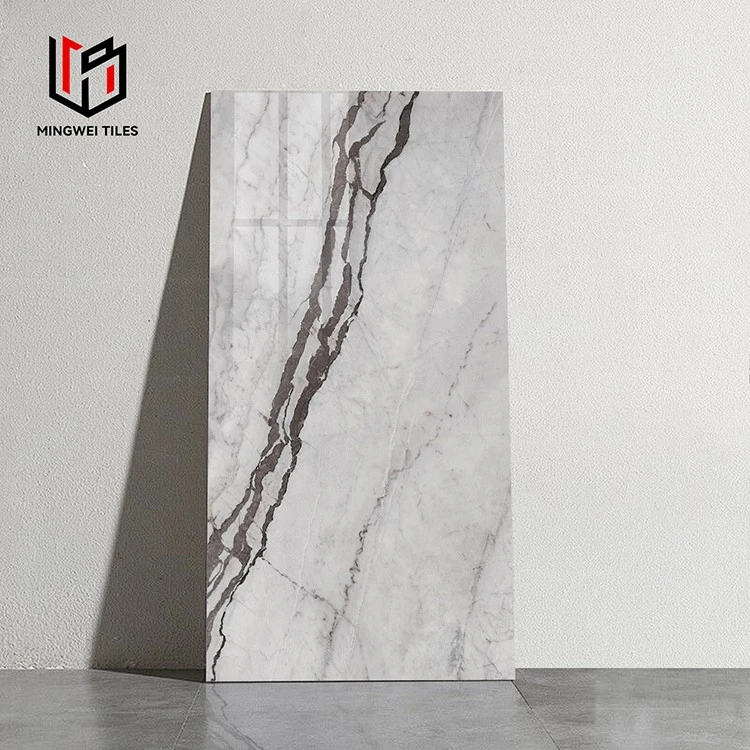

Quartz is a hard, crystalline mineral that is often used in ceramic tile production to improve the tile's strength and durability. Quartz is also used to give the tiles a smooth, polished surface. Quartz is typically mined from deposits around the world, including the United States, Brazil, and Australia.
Talc is a soft, greasy mineral that is often used in ceramic tile production as a lubricant. Talc helps to improve the tile's workability and prevent it from sticking to the molds during the manufacturing process. Talc is typically mined from deposits around the world, including the United States, China, and India.
Other Additives: Enhancing Performance
In addition to clay and minerals, ceramic tiles may also contain a variety of other additives that are used to enhance the tile's performance. Some of the most common additives used in tile production include water, binders, and colorants.
Water is used in ceramic tile production to help mix the clay and other materials together and to make the mixture more workable. Water is also used to cool the tiles during the firing process.
Binders are used in ceramic tile production to help hold the clay and other materials together and to prevent the tiles from cracking or breaking during the manufacturing process. Some of the most common binders used in tile production include starch, cellulose, and synthetic polymers.
Colorants are used in ceramic tile production to give the tiles their color. Colorants can be either natural or synthetic, and they can be added to the clay mixture before or after the tiles are formed. Some of the most common colorants used in tile production include iron oxide, titanium dioxide, and cobalt oxide.
Our Commitment to Sustainability
At our company, we are committed to using sustainable raw materials in the production of our White Gold Ceramic Tiles. We source our clay, minerals, and other additives from suppliers who are committed to responsible mining practices and environmental stewardship. We also use a variety of recycling and waste reduction techniques to minimize our impact on the environment.
Conclusion
So, there you have it! The raw materials for our White Gold Ceramic Tiles come from a variety of sources around the world, including clay, minerals, and other additives. Each of these materials plays an important role in the production of our tiles, giving them their unique color, texture, and durability.
If you're interested in learning more about our White Gold Ceramic Tiles or any of our other products, such as Double Style Glazed Gold Porcelain or Black Gold Tiles, please don't hesitate to contact us. We'd be happy to answer any questions you may have and to help you find the perfect tiles for your project.
References
- Ceramic Tile Institute of America. (n.d.). Ceramic Tile Manufacturing Process. Retrieved from https://www.ceramictile.org/consumer-resources/ceramic-tile-manufacturing-process/
- International Council on Mining and Metals. (n.d.). Sustainable Mining. Retrieved from https://www.icmm.com/en-gb/sustainable-mining
- United States Geological Survey. (n.d.). Minerals Yearbook. Retrieved from https://minerals.usgs.gov/minerals/pubs/commodity/