

Why Importers Are Rebalancing Tile Ranges Toward Warm Neutral Matte Porcelain?
Jun 26, 2026
Leave a message
This is why the warm-toned neutral matte porcelain has become one of the more favored product categories among importers and distributors. Beige, greige, ivory, clay, and soft stone tones are not dramatic at first glance, but they solve a quiet commercial problem. They can enter more projects, match more interior styles, and create fewer objections from contractors, showroom clients, and local dealers.
The key point is that not all markets have abandoned the appearance of marble tiles. In the Middle East, parts of Southeast Asia, and in the villa-oriented markets, the smooth stone textures are still popular. However, when buyers are creating a product line that can be resold stably, warm neutral-toned porcelain can offer them more flexibility in operation.
A range that works across more buyer conversations
An importer might supply goods to a bathroom contractor on Monday, sell small showroom products on Wednesday, and then deliver the goods to residential project buyers on the weekend. If a type of brick is only suitable for a single design direction, it will be difficult for it to flow smoothly in such a distribution channel.
The warm neutral matte tiles demonstrate great versatility. They can be used as the floor in the living room, the wall in the bathroom, the floor in hotel guest rooms, or the background wall in light commercial settings. Tiles of the same series can be paired with wood-grain panels, brushed metal decorative elements, sound-absorbing wall panels, or simple white bathroom fixtures without conflicting with the final effect of other parts of the entire project.
This flexibility is particularly important for B2B buyers, as the risk of stockpile accumulation is often more troublesome than the cost of samples. Distributors not only need the tiles that look good in the photos, but also the tiles that can enable local customers to envision the actual application effect without much explanation.Why matte finish feels safer for project channels
Matte porcelain is not automatically better than polished porcelain. It simply answers a different set of buyer concerns.
For project contractors, a softer surface often feels easier to recommend in daily-use areas. It does not rely on strong reflection to create value, and it is less tied to a single luxury style. For showroom buyers, matte finishes also allow a display to feel current without becoming too seasonal.
The more practical advantage is in expectation management. A polished surface can look impressive under showroom lighting, but the end customer may notice fingerprints, water marks, or strong reflection in real use. A warm matte surface gives the seller a calmer story: modern, neutral, easier to coordinate, and suitable for repeat projects.
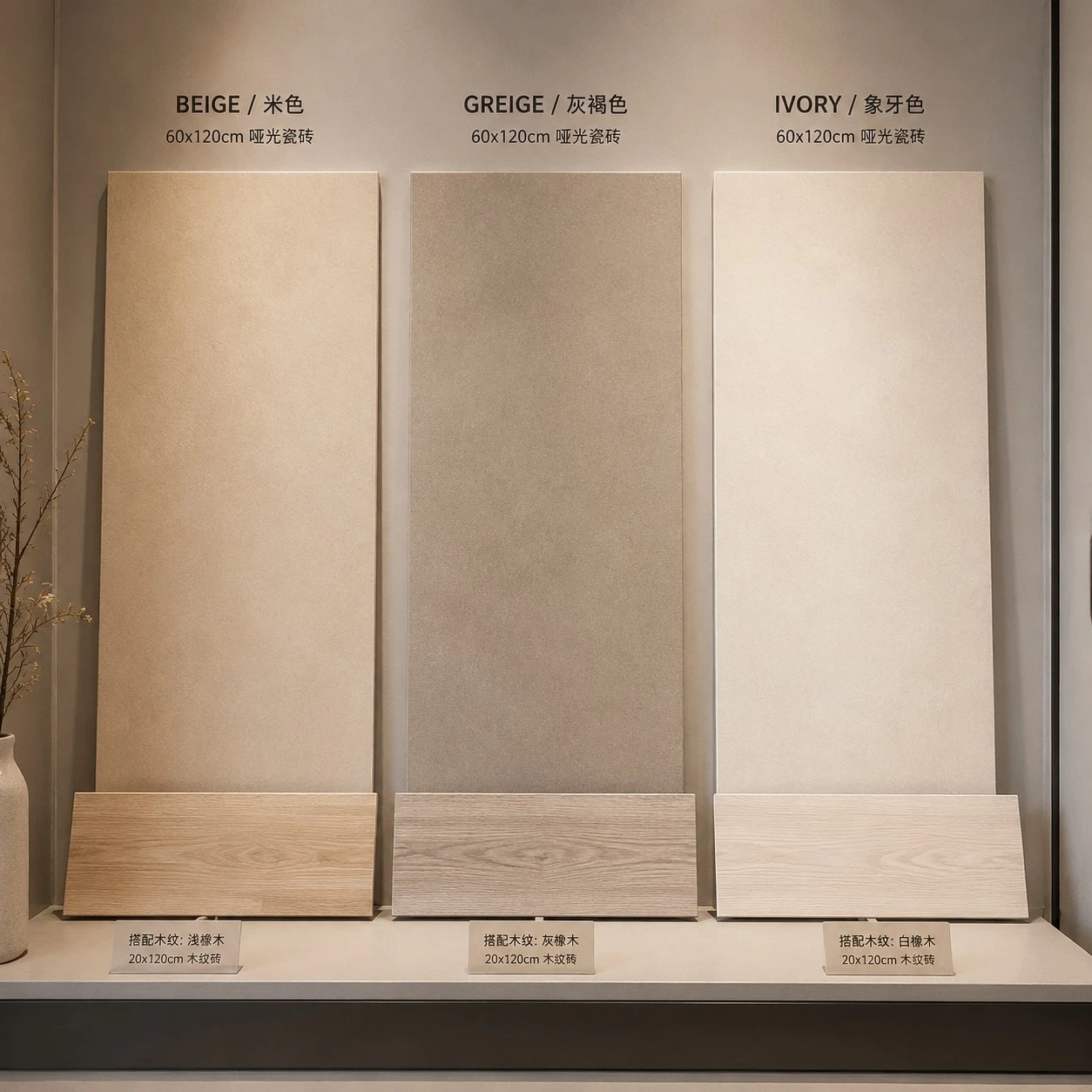
The color shift is small, but the buying logic is not
The difference between cold grey and warm greige may look small on a sample board. In trade terms, it can change the sales conversation.
Cold grey tiles often need the right furniture, lighting, and wall color to avoid looking too sharp. Warm neutral porcelain is more forgiving. It works with timber tones, cream walls, bronze fixtures, black hardware, and stone-look panels. That makes it useful for buyers who serve several customer groups instead of one narrow design preference.
Recent tile trend reports from Coverings and Tile of Spain have kept pointing toward natural surfaces, tactile finishes, earthy tones, and quieter luxury. For tile buyers, the real takeaway is simple: trend-driven designs only matter when they can be developed into product lines that distributors can successfully sell.
How this category fits into a container plan
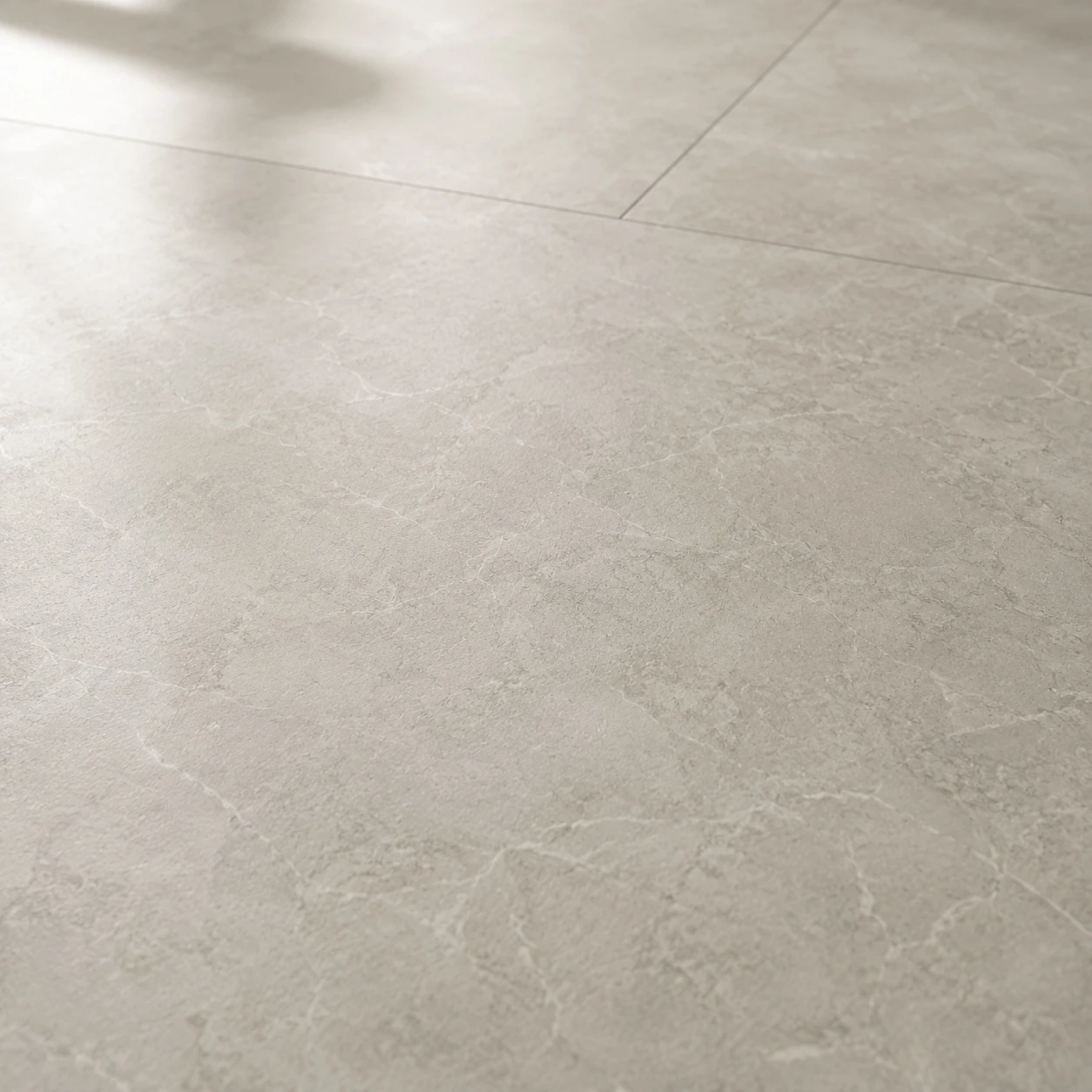
For a buyer placing a mixed container, warm neutral matte porcelain can work as the stable middle of the order. A container might still include polished marble look tiles for higher-impact spaces, decorative gold tiles for feature walls, and a few darker designs for showroom attention. The neutral matte series is the part that helps keep the range usable for everyday projects.
In practice, that often means choosing one or two easy-moving tones first, then adding texture or vein detail carefully. A beige stone look with controlled movement is usually easier to place than a pattern that needs a very specific interior style. This is particularly important for large-format tiles, such as 600×1200 mm, as bold patterns can easily become the dominant visual element in a space.
The best series are not necessarily the most extensive ones; rather, they are the ones where each design serves a clear purpose and function.

What buyers should notice before approving samples
With warm neutral tiles, the details are subtle, so sample approval should not stop at color. Buyers should look at how the surface behaves under different lighting, whether the tone turns too yellow or too grey, and whether the pattern repeats in a way that will be obvious after installation.
For importers and showroom owners, it is also worth checking whether the collection can sit beside other products in the same sales program. A neutral matte tile should support the wider range, not compete with every other display.
The questions are simple, but they are the questions that reduce slow-moving stock:
Does the color work with local furniture and sanitary ware trends?
Can this tile be shown for both residential and light commercial projects?
Is the surface detail visible enough to sell, but quiet enough for large areas?
Will the shade still feel current next year?
A supplier note from the export side
From the perspective of suppliers, matte neutral warm-toned tiles are highly practical as they enable a more stable communication between overseas buyers and customers. They do not solely rely on fashion trends but also depend on the performance of the product within the overall sales strategy: surface treatment, color temperature, size, packaging, and the product's compatibility in the customer's overall plan.
For Mingwei Tiles, this category naturally connects with tiles, marble-patterned tiles, matte tiles, and wall decoration systems. It provides an essential product for importers, enabling them to introduce more decorative or higher-profit additional items within the same set of products.
Typically, the generation of loyal customers begins here: not from a single stunning design, but from a series of products that help buyers reduce adjustments and make the sales process easier.